The role of 5G technology in the transformation of smart cities
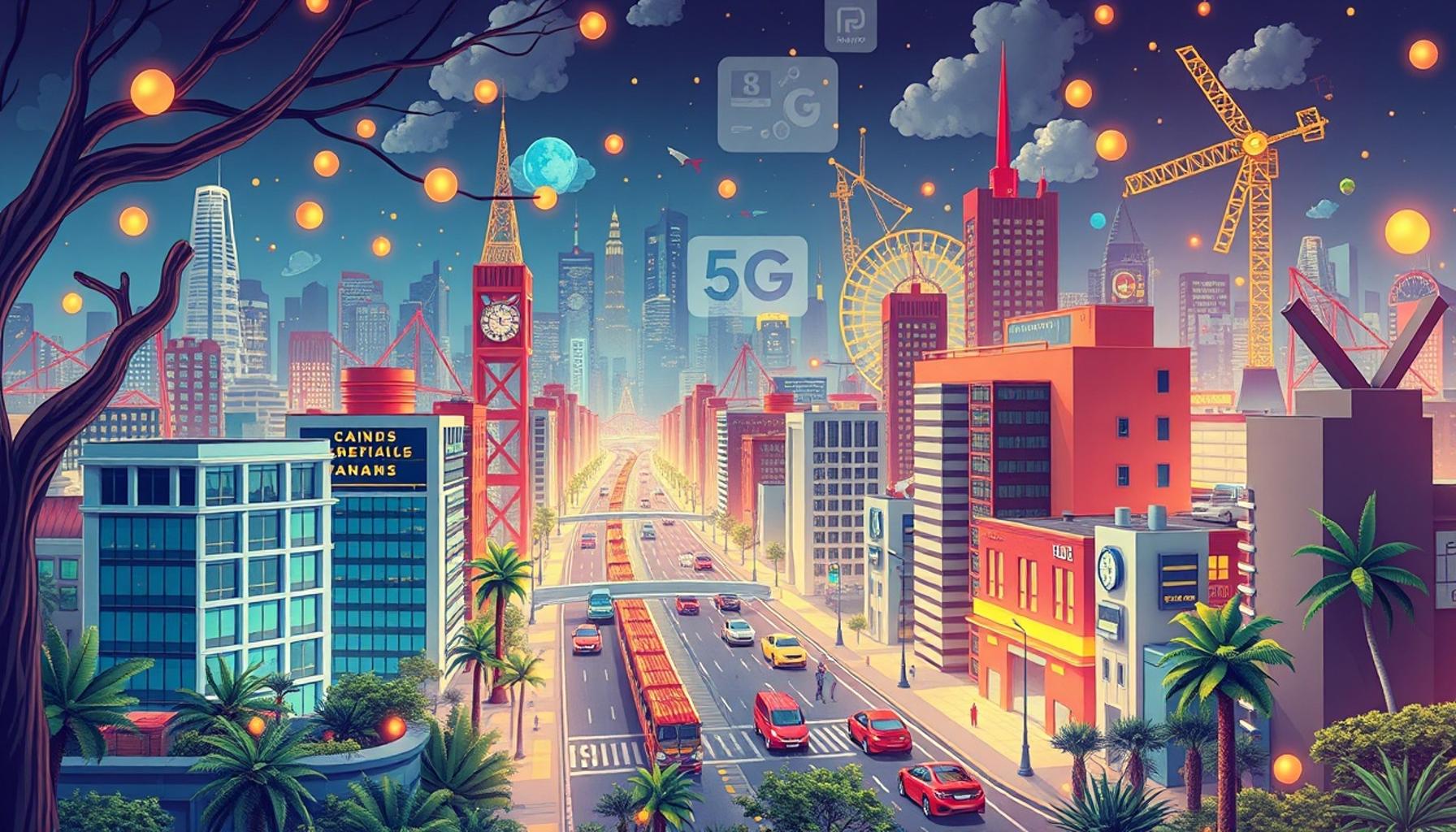
Transforming Urban Living with 5G Technology
The introduction of 5G technology represents a groundbreaking advancement in mobile connectivity, significantly impacting the development of smart cities throughout the United States. With capabilities that include unprecedented data speeds, reduced latency, and improved network reliability, 5G is set to revolutionize how urban environments function and interact with their inhabitants.
Empowering Applications for Smart Cities
As cities transition into smarter ecosystems, 5G serves as a vital backbone for several innovative applications. By offering robust connectivity, 5G enables the following key advancements:
- Autonomous vehicles: The deployment of self-driving cars relies heavily on dependable connectivity to share real-time data with nearby vehicles and infrastructure. For example, traffic signals can send alerts to autonomous vehicles, informing them about changes in traffic patterns, thereby enhancing road safety and efficiency.
- Smart public transportation: Public transportation systems can utilize 5G for live tracking of buses and trains. This enhances operational efficiency by reducing waiting times and providing passengers with accurate arrival information through mobile apps, thereby improving overall rider experiences.
- IoT devices: As the number of Internet of Things (IoT) devices in urban areas skyrockets, 5G’s improved connectivity becomes crucial. Smart streetlights, environmental sensors, and waste management systems can transmit data seamlessly, allowing city officials to monitor and manage resources effectively, helping maintain cleaner and safer environments.
Key Features of 5G in Urban Environments
The significance of 5G in enhancing urban livability is underscored by its key features:
- Low latency: Timely data transmission is essential, particularly for services like emergency response. For instance, first responders can utilize 5G to receive instant updates from CCTV footage, enabling quicker decision-making in critical situations.
- High bandwidth: 5G networks can handle large amounts of data simultaneously, supporting applications like high-definition video surveillance for public safety or enhanced broadband access for residents.
- Support for numerous connections: With the ability to connect a substantial number of devices at once without network slowdowns, 5G allows a city to implement smart solutions widely, from traffic management systems to energy-efficient buildings.
The Potential of 5G in Urban Transformation
In summary, the innovative capabilities of 5G technology not only promise efficiency within urban environments but also contribute to creating sustainability and enhancing quality of life for residents. As cities continue to adopt these advancements, we can expect a significant transformation in how urban areas operate and respond to the ever-changing needs of their populations, ultimately fostering more livable and resilient communities.
LEARN MORE: Click here for essential tips
Enhancing Urban Efficiency and Sustainability
The integration of 5G technology into urban infrastructures heralds a new era of enhanced efficiency and sustainability for smart cities. By fundamentally changing how cities communicate and interact with technology, 5G lays the groundwork for optimized resource management and improved public services. This transformation is particularly significant as cities face mounting pressures from population growth, urbanization, and climate change.
Smart Infrastructure Development
One of the primary applications of 5G technology lies in the development of smart infrastructure. This includes the deployment of advanced systems that utilize real-time data analytics to drive decision-making processes. Consider the following examples:
- Energy management: Smart grids empowered by 5G technology allow for real-time monitoring and control of electricity distribution. This ensures that energy consumption is optimized, reducing waste and lowering costs for both consumers and city budgets. For instance, cities can automatically reroute energy during peak usage times, assisting in load balancing and minimizing the risk of blackouts.
- Smart street lighting: With 5G connectivity, streetlights can be outfitted with sensors that detect pedestrian movement or ambient light levels. This enables them to adjust brightness automatically, leading to energy savings and improved safety for pedestrians.
- Connected parking solutions: 5G technology facilitates the creation of smart parking systems that can guide drivers to available spaces in real time. Not only does this reduce frustration for motorists, but it also significantly diminishes vehicle emissions caused by circling for parking.
Improved Public Safety and Emergency Services
5G technology plays a critical role in enhancing public safety and emergency response capabilities within smart cities. The rapid transmission of data can enable better coordination and response in emergency situations:
- Real-time surveillance: Enhanced video surveillance systems equipped with 5G allow law enforcement to access live feeds from multiple sources. This data enables quicker reactions to incidents and improved crime prevention strategies.
- Smart fire and emergency systems: Fire departments can utilize connected sensors to identify smoke or heat anomalies in buildings, allowing for faster responses to fires and potentially saving lives. This dynamic capability can recalibrate response protocols based on real-time data.
- Disaster management: In the event of natural disasters, 5G can facilitate better communication among first responders, ensuring that they have the most up-to-date information to act effectively. For instance, drones equipped with 5G can provide aerial views of affected areas, aiding search and rescue operations.
Overall, the integration of 5G technology into urban planning and public safety brings forth numerous benefits that not only improve the quality of life for residents but also contribute to a more sustainable urban environment. By leveraging real-time data and connectivity, cities can become more adaptive and resilient, ready to tackle the challenges of modern urban living.
DISCOVER MORE: Click here to enhance your financial control
Fostering Economic Development and Innovation
Beyond enhancing urban efficiency and sustainability, 5G technology is pivotal in driving economic development and fostering innovation within smart cities. The ultra-reliable low-latency communication that 5G offers is a catalyst for new business opportunities and advanced technologies that can revolutionize urban economies.
Facilitating IoT and Smart Technologies
5G enables the proliferation of the Internet of Things (IoT) devices, which can collect and share data seamlessly. This increased connectivity paves the way for innovative solutions across various industries:
- Smart agriculture: Urban farming can greatly benefit from 5G-enabled sensors that monitor soil conditions and weather patterns. Farmers can optimize yields by analyzing data in real time, making better decisions on irrigation and crop management, thus promoting food security within city limits.
- Telehealth services: The healthcare sector stands to gain significantly from 5G. Virtual consultations and remote monitoring can become more effective with the fast transmission of data, enhancing patient care and reducing the burden on hospitals. For example, wearable health devices can transmit real-time patient data to healthcare providers, allowing for timely interventions.
- Smart transportation solutions: 5G technology can streamline public and private transportation systems. By integrating with traffic signals and public transit schedules, cities can create efficient traffic management systems that decrease congestion and travel time. Additionally, autonomous vehicles can communicate seamlessly with their environment, enhancing safety and efficiency.
Encouraging Entrepreneurship and Tech Hubs
The advent of 5G technology fosters entrepreneurship by creating conducive environments for startups and tech hubs to thrive. As cities become more connected, they attract businesses looking to innovate using cutting-edge technology:
- Startup ecosystems: Areas equipped with 5G can encourage the growth of tech startups focused on developing applications and services tailored to smart city solutions. For example, a city that invests in 5G infrastructure may see companies emerge that specialize in smart home technologies, energy-efficient systems, or enhanced public safety applications.
- Collaborative innovations: Universities and research institutions can leverage 5G connectivity to collaborate on smart city projects, providing students and researchers opportunities to work on real-world challenges. This not only sparks innovation but also prepares a new generation of skilled workers ready to enter the tech industry.
- E-commerce growth: In a 5G-enabled city, businesses can improve their e-commerce strategies by utilizing augmented reality (AR) and virtual reality (VR) technologies, offering immersive shopping experiences that attract consumers. This shift can contribute significantly to local economies while enhancing the retail landscape.
The role of 5G in driving economic development and fostering innovation in smart cities cannot be overstated. By enabling advanced technologies and cultivating business ecosystems, 5G creates a fertile ground for new ideas, products, and services that can lead to a more vibrant and prosperous urban landscape. As these innovations continue to unfold, cities will not only improve the quality of life for their residents but also position themselves as leaders in the global digital economy.
DISCOVER MORE: Click here for a step-by-step guide
Conclusion
In summary, 5G technology is fundamentally reshaping the landscape of smart cities, serving as a backbone for enhanced connectivity and innovation. By enabling faster data transmission and connecting a myriad of devices, 5G facilitates real-time communication between urban infrastructure, businesses, and residents. This connectivity leads to significant advancements in public services, transportation, healthcare, and public safety, ultimately elevating the quality of life for city dwellers.
Moreover, the economic implications of 5G cannot be underestimated. As we have discussed, it fosters entrepreneurship by creating vibrant tech hubs where startups can thrive and innovate. Cities equipped with robust 5G infrastructure are better positioned to attract investments and talent, which contributes to a competitive, modern economy. This not only assists in driving local growth but also places cities at the forefront of the global digital economy.
The transformative potential of 5G in smart cities goes beyond mere improvements in technology; it holds the promise of creating interconnected, efficient, and sustainable urban ecosystems. However, as cities embark on this journey, stakeholders must ensure equitable access to these technologies and prioritize inclusivity, ensuring that advancements benefit all residents. With careful planning and collaboration, the ongoing integration of 5G will undoubtedly pave the way for a smarter, greener, and more connected future.

Linda Carter
Linda Carter is a writer and expert known for producing clear, engaging, and easy-to-understand content. With solid experience guiding people in achieving their goals, she shares valuable insights and practical guidance. Her mission is to support readers in making informed choices and achieving significant progress.